Auto-Updating Accessibility Statement — LiveStatement™
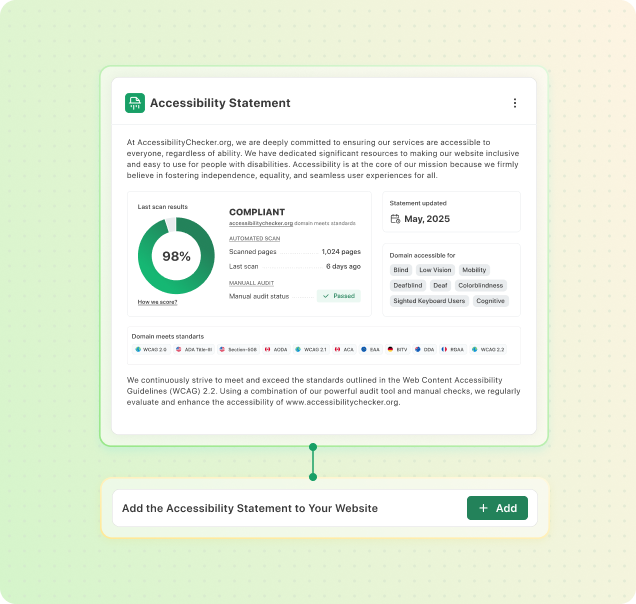
Your accessibility statement stays accurate automatically. LiveStatement syncs with your ACE Scanner results, updating your compliance status, known issues, and remediation timeline in real time.




























What Is LiveStatement?
LiveStatement™ is an auto-updating accessibility statement generator developed by AccessibilityChecker.org. Most organizations publish an accessibility statement once, then forget about it. That statement becomes outdated the moment you fix an issue, discover a new problem, or change your remediation plans. LiveStatement solves this by automatically syncing your accessibility statement with your actual compliance status. Every time you run an ACE Scanner scan, LiveStatement updates your statement to reflect the current ACE Score, known issues, and remediation timeline.
An accurate, up-to-date accessibility statement is essential for legal compliance and user trust. The European Accessibility Act (EAA) requires organizations to maintain a current accessibility statement describing compliance status, known issues, and remediation plans. The ADA best practices recommend the same. Outdated statements that claim compliance when your site has known issues can create legal liability. LiveStatement eliminates this risk by keeping your statement current automatically.
The Problem with Static Accessibility LiveStatements™
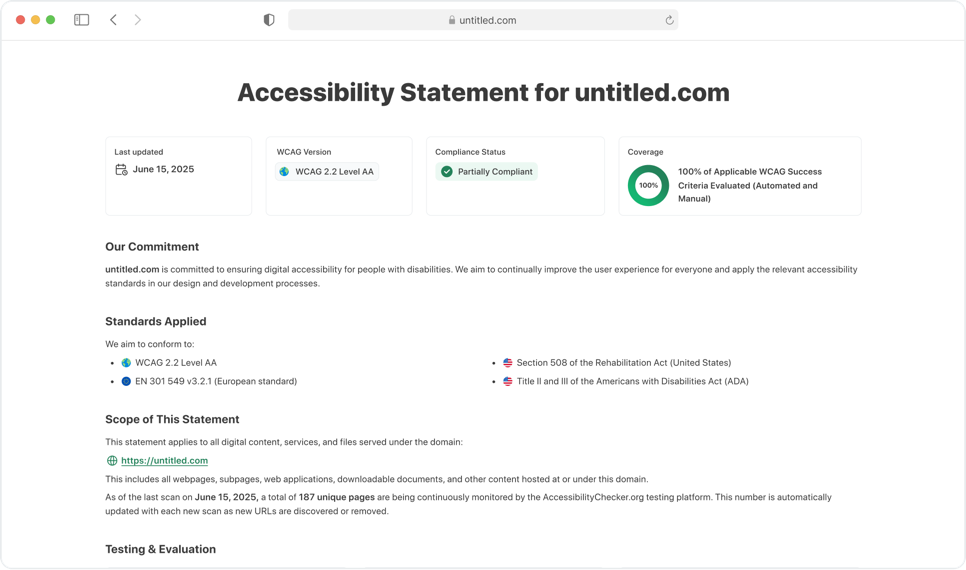
Most organizations publish an accessibility statement as a static document, often during a compliance initiative or in response to a lawsuit. The statement describes the organization's commitment, outlines the standards being followed (WCAG 2.1 AA, Section 508, etc.), and lists known issues or limitations. This is good practice. The problem: as soon as your website evolves, the statement becomes inaccurate. You fix three issues, discover five new ones, or deploy a redesigned feature that introduces new accessibility gaps. Your statement doesn't change. Now your published statement claims compliance that you no longer have. Auditors, regulators, and plaintiffs' lawyers see that disconnect. A false or outdated accessibility statement is more harmful than having no statement at all—it demonstrates bad faith.
The EAA Directive 2016/2102 explicitly requires organizations to maintain statements that accurately reflect their current compliance status. The ADA and Section 508 best practices say the same. LiveStatement by AccessibilityChecker.org was designed specifically to solve this problem. Instead of manually updating your statement every time your website changes, LiveStatement updates it automatically. The statement always reflects your actual ACE Score, your current known issues, and your remediation timeline, updated in real time as you fix issues and deploy new content.
Even if accessibility issues are present on your site, the fact that you are aware of them and publicly declare them in your accessibility statement as under active remediation demonstrates an ongoing commitment to accessibility. Courts and regulators distinguish between organizations that ignore accessibility and those that have a documented, continuous process in place. A statement that says "we have identified X issues and are actively working to resolve them" shows good faith, and organizations that can demonstrate an ongoing accessibility process are far less likely to be targeted by lawsuits. Most accessibility regulations, including the EAA and ADA best practices, do not demand perfection. They require a genuine, documented effort toward compliance. LiveStatement keeps your statement aligned with reality so that your public commitment always matches your actual progress.
14 Legal Requirements LiveStatement Covers
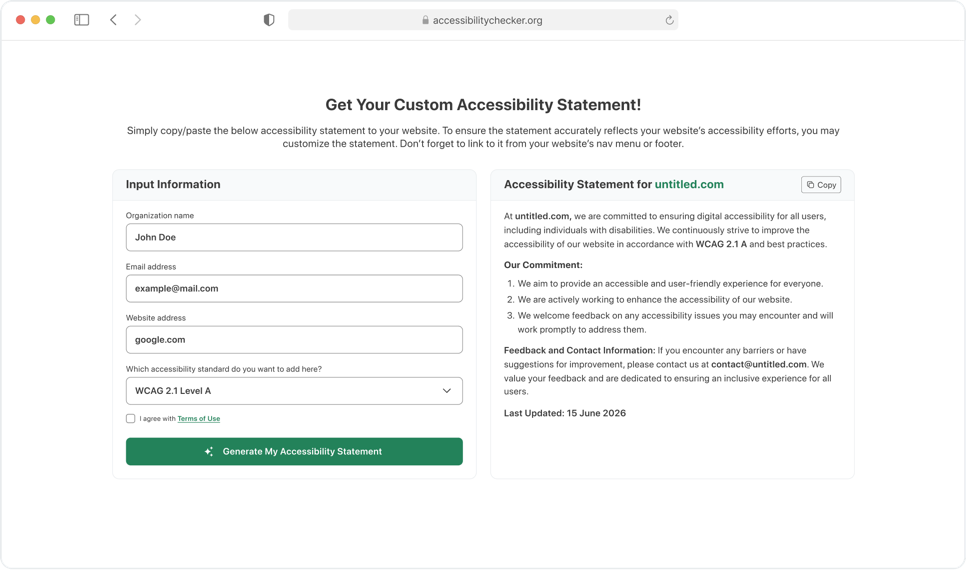
AccessibilityChecker.org's LiveStatement automatically includes all 14 components required by the EAA Directive 2016/2102, the ADA Best Practices, and Section 508 guidance. Each component is kept current and automatically updated as your compliance status changes:
How LiveStatement Works
LiveStatement by AccessibilityChecker.org keeps your accessibility statement accurate with a simple setup process.
Legal Compliance: Which Laws Require Accessibility Statements
LiveStatement by AccessibilityChecker.org helps you meet the accessibility statement requirements in multiple legal frameworks. The European Accessibility Act (EAA) / European Web Accessibility Directive (EWAD) explicitly requires public-sector websites and many private-sector services to publish a detailed accessibility statement. The Americans with Disabilities Act (ADA) doesn't mandate a statement, but the DOJ's technical guidance strongly recommends one. Section 508 of the Rehabilitation Act requires federal agencies to document their accessibility conformance. The WCAG 2.2 specification recommends that all organizations publish a conformance statement. ATAG (Authoring Tool Accessibility Guidelines) requires tool vendors to document their accessibility features and limitations. Many state laws, provincial regulations (Canada's AODA, for example), and industry standards (healthcare, finance) also require current accessibility statements.
LiveStatement covers all these requirements in a single statement. The statement is generated from AccessibilityChecker.org's legally reviewed template, ensuring compliance with EAA, ADA guidance, Section 508 requirements, and WCAG recommendations. Organizations can customize the statement with their own policies while maintaining legal compliance.
Who Needs an Accessibility Statement?
LiveStatement by AccessibilityChecker.org is designed for any organization that wants to demonstrate commitment to accessibility and comply with legal requirements. Public-sector organizations are legally required to publish statements under the EAA/EWAD. Private-sector organizations in the EU are increasingly required under EAA requirements. Government contractors in the US must document Section 508 compliance and should have accessibility statements. Enterprises managing large, complex websites benefit from accurate statements that reflect their actual compliance status. Non-profits and small businesses use LiveStatement to show good-faith accessibility effort and build user trust. Educational institutions, healthcare organizations, and financial services companies use statements to meet legal, accreditation, and industry-standard requirements.
Even organizations not strictly required to have a statement benefit from having one. An accurate accessibility statement tells users what to expect, builds trust, provides a contact mechanism for accessibility issues, and demonstrates that your organization cares about inclusive design. LiveStatement makes maintaining such a statement automatic, removing the burden of manual updates.
Continuous Updates: Your Statement Stays Current
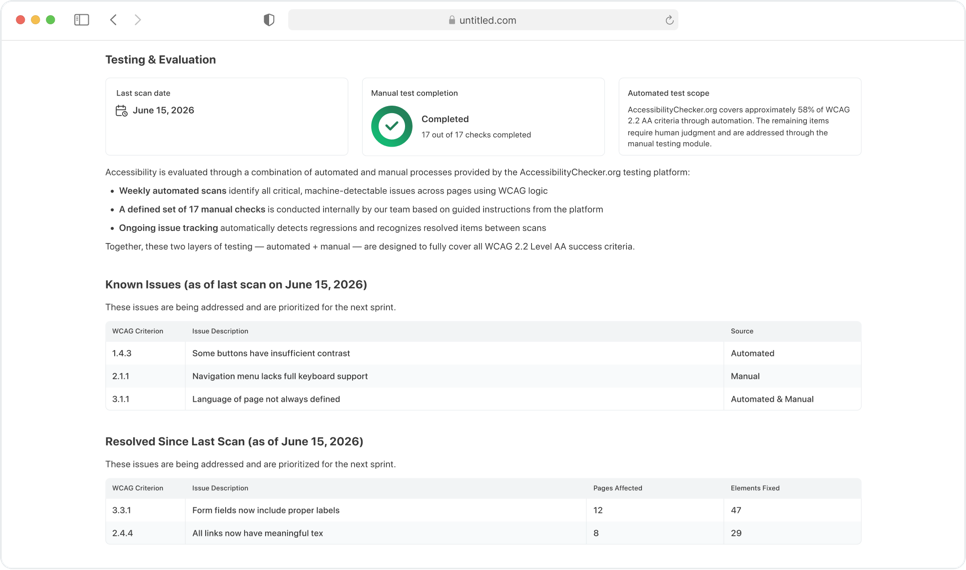
The power of LiveStatement by AccessibilityChecker.org is that it continuously reflects your actual accessibility status. When you run an ACE Scanner scan and discover new issues, those issues appear in your published statement automatically. When you fix an issue using SmartFix or manual remediation and re-scan, the statement updates to remove that issue from the "Known Issues" list and improve your ACE Score. When you deploy a new feature that introduces accessibility gaps, the next scan captures it and your statement reflects it. This creates a statement that's always defensible because it always reflects reality.
LiveStatement also tracks your remediation timeline. When you identify an issue and estimate when it will be fixed, LiveStatement includes that timeline in your statement. As the fix date approaches, the statement reflects the progress. If an issue takes longer than expected, your statement updates automatically. This transparency - showing users and regulators exactly what you're working on and when - is powerful evidence of good-faith compliance effort in litigation, regulatory review, and user trust.
Seamless Integration with ACE Scanner and the ACE Platform
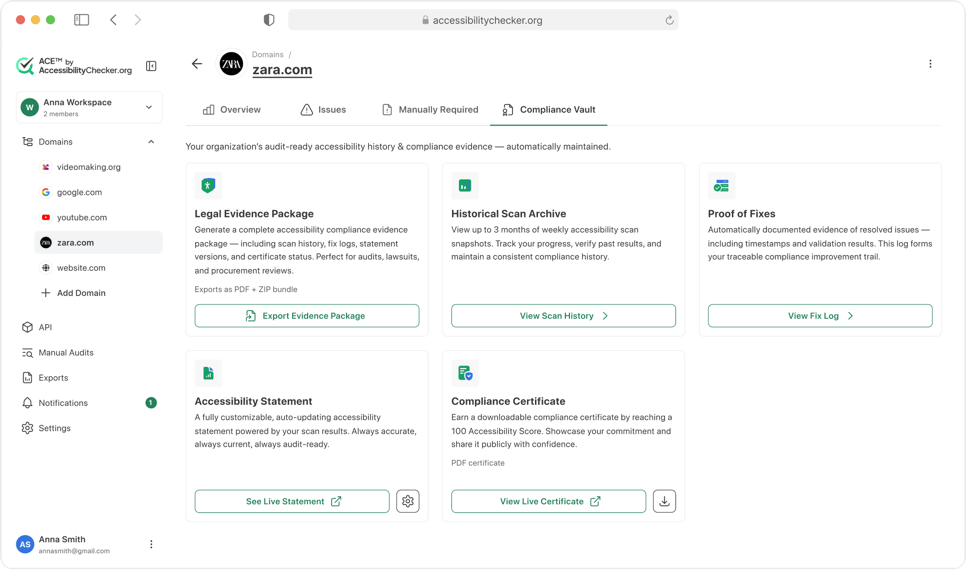
LiveStatement is built directly into the ACE Platform by AccessibilityChecker.org. When you scan with ACE Scanner, your statement updates automatically. When you use SmartFix to remediate issues, your statement reflects the fixes. When you manage evidence in Compliance Vault, your statement is archived there as part of your compliance timeline. This tight integration means you're managing a single, unified accessibility program - not juggling separate tools for scanning, fixing, and compliance communication.
The ACE Platform's REST API includes LiveStatement endpoints. This means you can generate statements programmatically, embed them on your website, or integrate them into your CMS. For organizations with mature automation practices, LiveStatement can be deployed as part of your CI/CD pipeline: every time you deploy code, a scan runs, your statement updates automatically, and your published statement reflects the latest compliance status without any manual intervention.
The Complete Accessibility Compliance Platform
LiveStatement is one piece of the ACE Platform by AccessibilityChecker.org. Together with ACE Scanner, SmartFix, Compliance Vault, and the REST API, it forms a complete system for discovering, fixing, proving, and communicating accessibility compliance. Every product in the platform uses the same ACE Engine, the same ACE Rule IDs, and the same ACE Impact Classification, so your data is consistent and your compliance communication is accurate.
Frequently Asked Questions
LiveStatement keeps your compliance communication current and legally defensible